Humble Beginnings
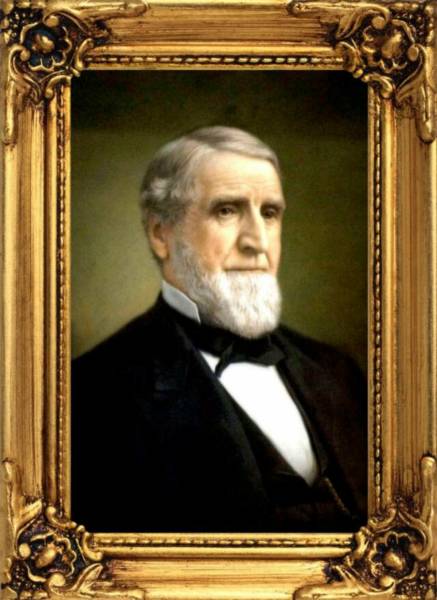
Asa Packer (1805-1879) was born into humble circumstances to Elisha and Desiree Packer on December 29, 1805.  He came from a small family, having only four siblings - Lucy, Eldredge, Robert, and Eveline.  As a youngster, Asa's education was limited to entering the tannery of Elisha Stonington.  In 1822, at the age of seventeen, Asa left his home in Mystic, Connecticut, and set out on foot to Brooklyn, Susquehanna County, Pennsylvania where he apprenticed as a carpenter to his cousin, Edward Packer.  In 1827, Asa traveled to New York seeking employment in his new trade, but to no avail.  He returned to Susquehanna County within a year, settling in Springville Township.

On January 23, 1828, Asa married, having caught the eye of Sarah Minerva Blakslee (1807-1882), daughter to Zophar and Clarinda Whitmer Blakslee.  The Packers celebrated their marriage among family and friends at a small country inn belonging to Sarah's sister in Dimock Four Corners, Susquehanna County, Pennsylvania.  Together, Asa and Sarah rented and tilled a farm that belonged to Sarah's father.  The crops proved to be so poor, and the markets were so distant, that by the end of four years, the newlyweds were just as poor as when they had first started.
Coming To Mauch Chunk
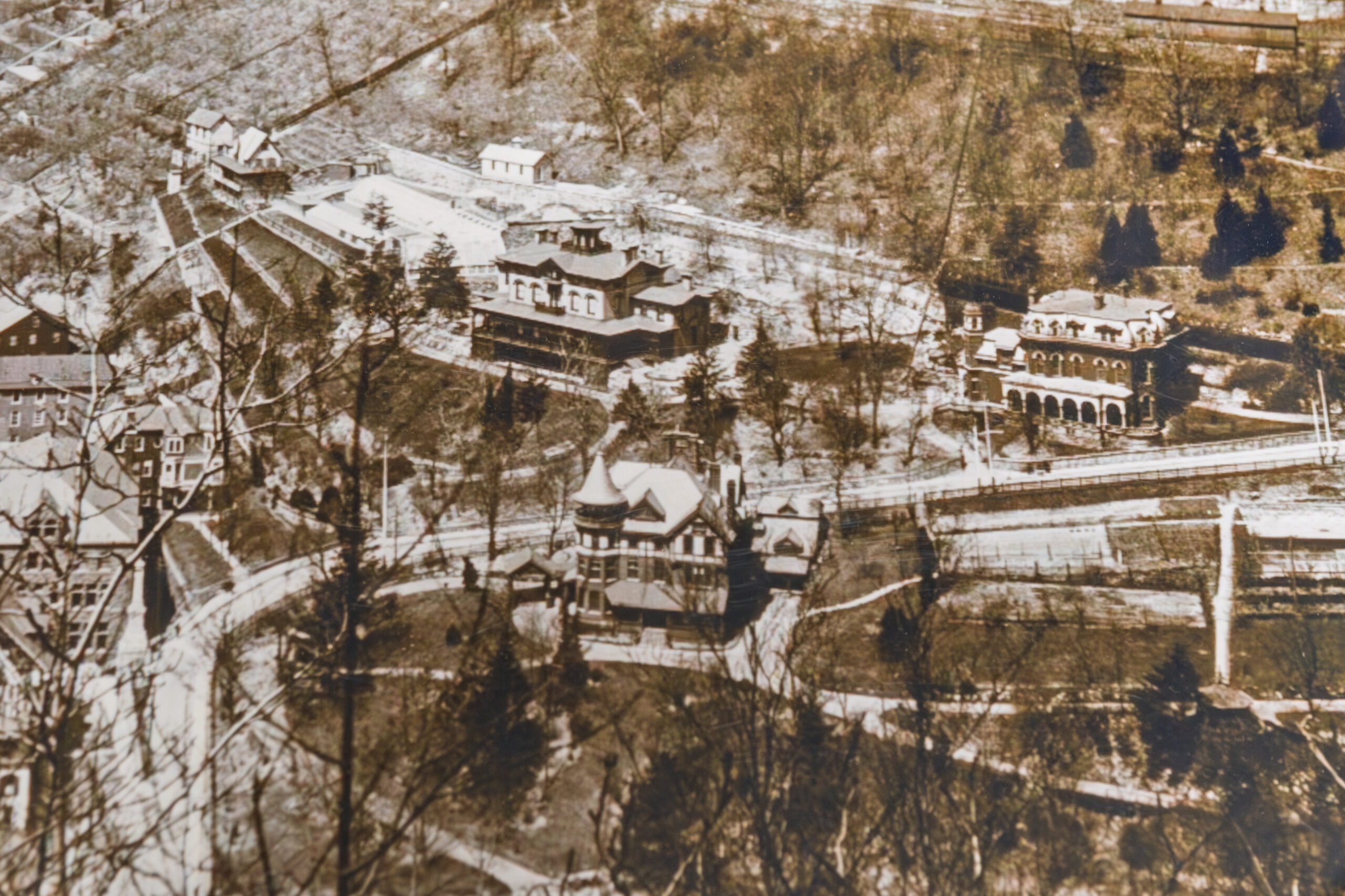
In the winter of 1832, hearing that men were needed to captain coal barges on the Lehigh Canal, Asa traveled to Mauch Chunk, Pennsylvania.  Once there, he made an engagement to hire out for the summer, and later, returned home to settle his affairs.  In the spring of 1833, the
Future Generations
At the end of the Civil War, Asa prepared the expansion of railroad operations by making the most of postwar prosperity by establishing an educational institution "to help fill a national need for enlightened leadership" (Yates 4).  Asa always respected a well-rounded education.  It was something he never had himself, but deemed important for a prosperous future.  In 1865, Bethlehem, Pennsylvania became the home of Lehigh University.  A deeply religious and reverent man, Asa believed the university should serve "an intellectual and moral purpose, and that the country could be no stronger than the faith of its leaders" (Yates 4).  He endowed to this institution fifty-six acres of land and $500,000 in railroad stock.  In 1878, a group of alumni requested that Lehigh University become strictly an engineering school, believing that literature and history were not relevant, and that the teaching of such subjects was not necessary.  Asa listened attentively to which his answer was quite simply no.

Political Aspirations
In 1841, Asa turned his attention to politics, having been elected to the Pennsylvania State Legislature.  His only motion while serving was that a new county be formed (Carbon County, March 1843), and that Mauch Chunk be named the county seat.  Until that time, Mauch Chunk and the surrounding municipalities were part of Northampton and Monroe Counties.  His only motion was a success.  As a Democrat, Asa served as an Associate Judge of Carbon County under Governor David R. Porter, and as a two-term Congressman under President Franklin Pierce (1853-1857).  In 1868, Asa was a nominee for the Democratic Nomination for the Presidency of the United States.  The following year, in 1869, Asa ran for the Pennsylvania Governorship.  One lesson that Asa learned very quickly was:  Never oppose a Civil War General. 
The Asa Packer Mansion Museum  P.O. Box 108  Jim Thorpe PA  18229  (570)325-3229
Per Gradus Per Angusta Ad Augusta ~ Gradually Through Trial To Triumph
The other day, Asa Packer died, the richest man in the Commonwealth, and second to none in grandeur of achievement and measure of influence.  His whole career is another example of what young men in this country may accomplish through keen intelligence, dauntless energy and unyielding integrity.
Harper's Weekly, June 4, 1879, Volume XXIII
Packer family set out for Mauch Chunk.  As the years passed, Asa became a commander of canal boats, and later, became a contractor, building locks on the canal from Mauch Chunk to White Haven, Pennsylvania.  In 1839, Asa established large contracts to build locks on the upper Lehigh River, which he finished with large profits.  In 1840, in partnership with his brother, Robert, Asa established large contracts from Stockton and Stevens of New Jersey to build boats on the Schuylkill River for the direct shipment of coal to New York.  By 1852, Asa was already a wealthy man.

The Lehigh Valley Railroad
The canal system had its drawbacks, especially during the winter months.  Coal transport was limited due to the harsh winters.  A faster method of transportation was needed.  In October of 1851, risking financial ruin, Asa purchased nearly all the controlling stock and interest that was subscribed for the unfinished Delaware, Lehigh, Schuylkill, and Susquehanna Railroad.  By November of 1852, he expanded the building of the railroad from Mauch Chunk to Easton, Pennsylvania, connecting there to the New Jersey and Belvidere Railroads, thereby furnishing outlets to New York and Philadelphia.  Asa held that in exchange for the work, he was to receive the company's stocks and bonds.  In May of 1855, a cab of the locomotive, Great Wall, was mounted in South Easton, and was driven four miles up the line.  Christened the Lehigh Valley Railroad in January of 1853, the first trainload of coal was transported from Mauch Chunk to Easton in September of 1855.

A New Homestead
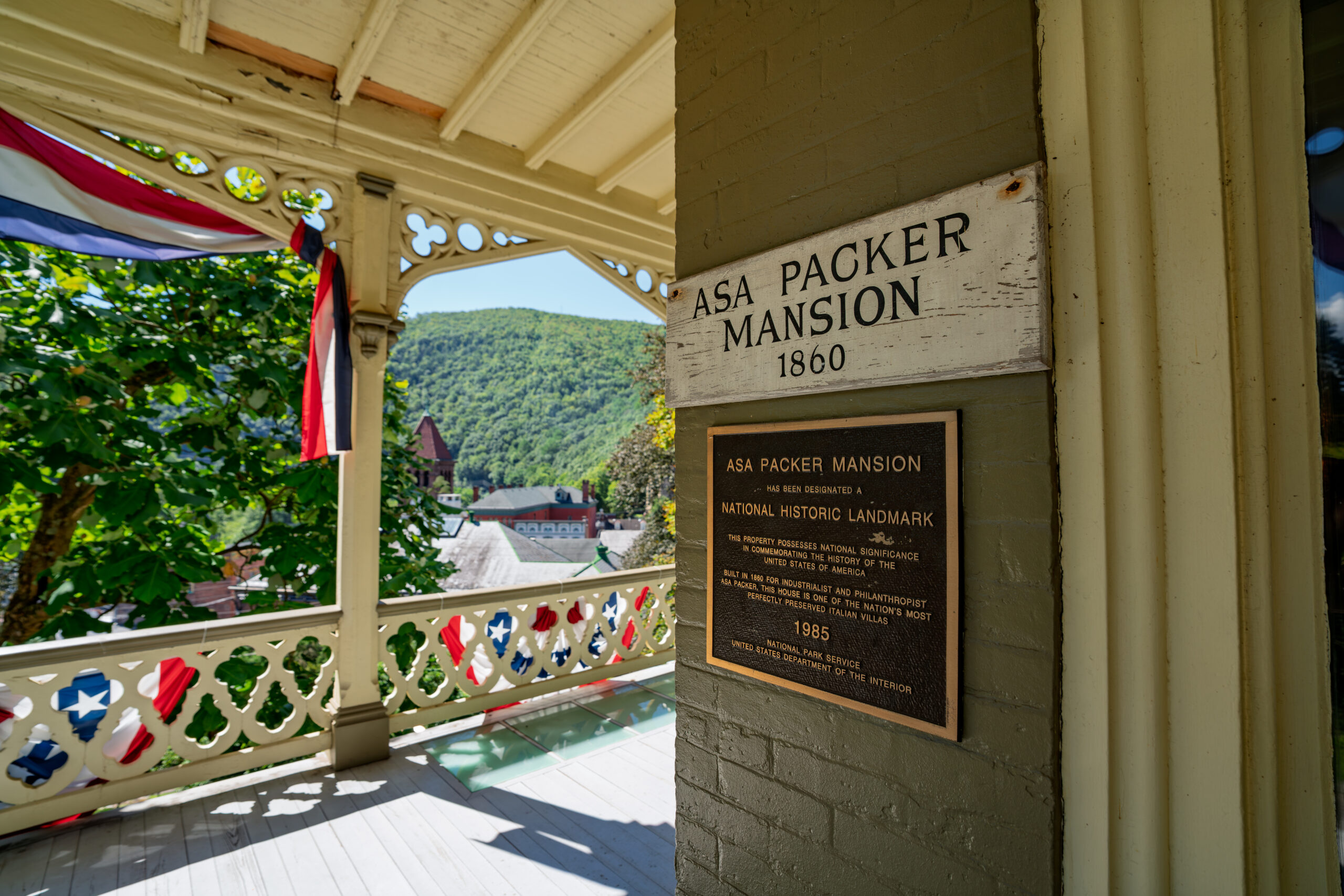
On October 16, 1861, the Packers, now in their fifties, settled in the home that can still be seen today.  The Italianate Villa, consisting of 18 rooms, 11,000 square feet of living space, and topped by a central cupola or belvedere, was designed by Philadelphia architect Samuel Sloan.  The Mansion took nearly two years to be built, and the cost of construction was $14,000 dollars, the equivalent of $2.3 million dollars today.  One unique feature of the construction was that the home was built over a cast iron frame, one of Asa's recommendations.
Asa Packer
"In Memory of Asa Packer."  Mr. Packer on the June 4, 1879 edition of Puck, America's first humor magazine.  He was depicted as Johnny Appleseed dispersing his millions, while his contemporaries, John Jacob Astor & Cornelius Vanderbilt were shown as statutes greedily clutching their money bags.  Mr. Packer was frowned upon by his contemporaries because he was considered nouveau riche.  It was far better to inherit a fortune rather than earn a fortune yourself.
"In Memory of Asa Packer"
General Ulysses S. Grant became president in 1868, and Asa was defeated by General John W. Geary by only 4,596 votes, one of the closest races in Pennsylvania history for the Governorship.  An interesting fact often ignored by Molly Maguire enthusiasts, Packer won 6 of the 7 coal counties - Carbon, Columbia, Luzerne, Northumberland, Schuylkill and Sullivan.

A Golden Anniversary
On January 23, 1878, Asa and Sarah celebrated their 50th wedding anniversary, one of the social highlights of the century:

Judge Packer and Mrs. Asa Packer will celebrate their golden wedding.  The sensible and kindly rule of "no presents" will be enforced, and the affair, which enlists the cordial sympathy of the whole region round about the home of Judge Packer, will be supervised by a committee consisting of the following gentlemen - Mr. James I. Blakslee, Mr. Harry E. Packer, Mr. G.B. Linderman, Mr. Robert Lockhart, Mr. Robert A. Packer, Mr. Charles O. Skeer, Mr. E.P. Wilbur and Mr. Robert H. Sayre.  Far beyond the limits of this home however, good wishes will attend this crowning anniversary of a well-spent life, and all who know how nobly and wisely this most estimable citizen has used and uses the trust of his great wealth will cordially hope that he and "the prudent partner of his blood" may live to keep a diamond wedding also with the opening of the twentieth century ~  As published in The Mauch Chunk Democrat, Saturday, January 26, 1878

The Packers received 1,500 guests to mark the occasion.  The Packers were married for fifty and a half years, but their life together was marked by tragedy.  Daughters Catharine, Malvina, and Gertrude all
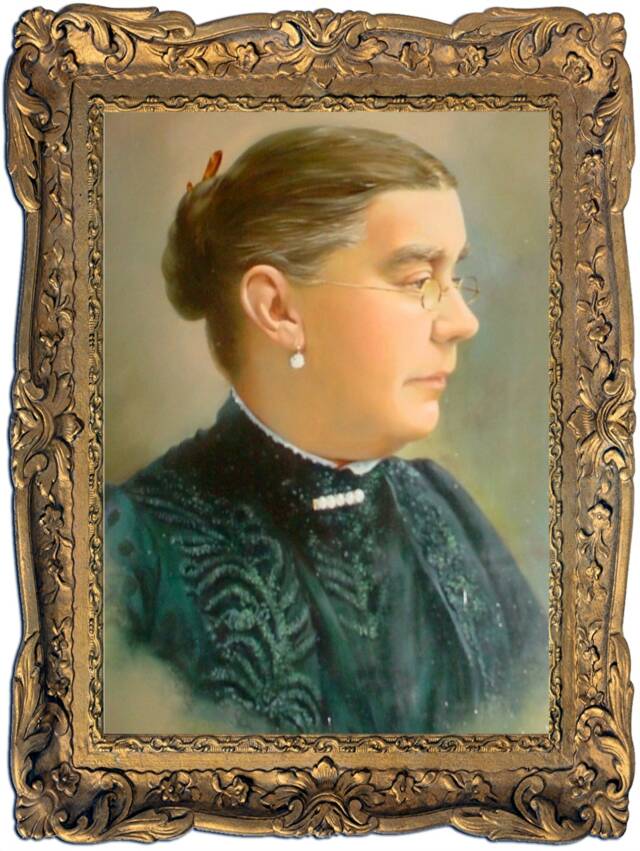
Asa and Sarah Packer
passed away before the age of two.  Lucy Eveline Packer Linderman (1832-1873) and Robert Asa Packer (1842-1883) both passed away from pneumonia.  Harry Eldred Packer (1850-1884) passed away from cirrhosis of the liver, complications which arose from a condition known as Bright's Disease, a defunct name for a type of nephritis, which unfortunately did damage to his liver as well.  Mary Hannah Packer Cummings (1839-1912) was the only child to survive into the 20th Century.  She passed away peacefully in her sleep at the age of seventy-three.  The family plot, which overlooks the home, is located in the Mauch Chunk Cemetery.

In Remembrance
Despite his successes, Asa's life was marked by personal sorrows.  The loss of his children at early ages quite possibly led him to many of his philanthropic ideals.  Considered nouveau riche by his contemporaries, Asa never truly forgot his humble beginnings, and in many respects, left the world far better than he found it.  Regarded as quiet and reserved, his generous deeds spoke for him.  A philanthropist throughout his lifetime, Asa gave $33 million dollars to the town of Mauch Chunk and to the Lehigh Valley.  A year and half after celebrating his 50th wedding anniversary, Asa passed away.  A fall at his office in Philadelphia had left him bedridden for several weeks in which time pneumonia had set in.  He would enter into rest on May 17, 1879.  He left behind his beloved wife, Sarah, and three children - Mary, Robert, and Harry.  At the time of his passing, Asa retained an estate valued at $54 and a half million dollars, the equivalent of $3.2 billion dollars today.

Mr. Packer's associates issued the following statement at a Lehigh Valley Railroad Company Board of Directors meeting after learning of his passing:

"The man of iron nerve, whose life was one of purity and uprightness, simple in habit, dignified in demeanor, fervent, earnest, free of all forms of ostentation, liberal beyond measure, to whose magnanimity of soul hundreds of living witnesses pay heartfelt tribute, had passed away May 17, 1879.  The Directors of the Lehigh Valley Railroad Company have heard with profound sorrow of the death of their President, the Hon. Asa Packer, by which each one of the Directors has lost a true and valued friend, the company has lost its founder and its sagacious leader, the laboring man has lost a sympathizing benefactor, and our country has lost a useful and patriotic citizen."  ~ As published in The Lehigh Valley Railroad Company's Annual Report, June 10, 1879

Mary Packer Cummings
Mary Packer Cummings, who held the same philanthropic ideals as her father, is the reason why The Mansion remains as part of local history today.  In 1912, she willed her family's home and all its contents to the Borough of Mauch Chunk where it would remain as a memorial to her father and his accomplishments.  At that time, however, the borough was not certain what to do with the home, and so, it was closed until 1956.  In the forty-four years that The Mansion remained closed, nothing was taken from the home; nothing was vandalized. 

The Jim Thorpe Lions were named as Trustees to The Mansion in 1954, and the home has been open to the public since Memorial Day of 1956.  The Mansion was designated a National Historic Landmark in 1985.  The Mansion has been conducting tours for 52 years.

Sources and Suggestions for Further Reading
The Diaries of Robert Heysham Sayre by Frank Whelan & Lance Metz, Lehigh University Press, 1990
Asa Packer:  A Perspective by W. Ross Yates, Lehigh University, 1983
A special thank you to Ava Bretzik, Director & Historian of The Asa Packer Mansion Museum, for her knowledge and expertise of all things Packer.

Home     Mansion Tour Information     Jim Thorpe Destinations     Further Reading